← Back to all work
A fingertip tapping a glowing phone screen in dim purple light. Email & CRM

Turning databases into relationships

Clients
Three organizations, names withheld
Role
CRM strategy, email & lifecycle automation
Systems
HubSpot, GA4, GTM & Meta
Focus
Segmentation, automation & retention
Channels Email Automation Paid Social Web
Tools HubSpot Meta Ads Google Analytics Google Tag Manager
Practice Segmentation Lead Scoring Deliverability Compliance
Scope Three engagements In-house & consulting
Overview

The Discipline

Email is the channel nobody gets excited to talk about, which is exactly why I like it. Nothing else in marketing lets you speak to someone who already said yes, at a moment you choose, in a voice they recognize, for close to free. And no channel is wasted more often, because the tool gets bought and the relationship never gets built.

A CRM is not software. It's the organization's memory. It knows who gave, who lapsed, who opened, who showed up, and what they did next. The software just holds that memory in one place, and most organizations are running on a memory scattered across tools that have never spoken to each other.

The three projects on this page are the same discipline applied at three starting points: a mature fundraising community whose enthusiasm had begun to plateau, a brand-new mission brand launching inside an established organization, and a digital product without a single contact in its database yet. Different audiences, different goals, same spine: segment honestly, automate the journey, say something worth opening, and measure all of it.

Client names are withheld from the copy on this page, one by agreement and the rest by choice, because the point here is the discipline rather than the logos. The work and the numbers are described exactly.

Re-Engagement
Email Paid Social Lifecycle

Re-Engaging a Mature Supporter Community

A national nonprofit had spent years building a loyal community of donors, volunteers, and peer-to-peer fundraisers around a flagship fundraising model people genuinely love. That was the problem. The community knew the model so well that participation had begun to plateau, and the CRM couldn't help, because it wasn't one system. It was Salesforce, Mailchimp, and a proprietary user-management platform, none of which agreed on who a supporter even was, so nobody could see a whole relationship in one place.

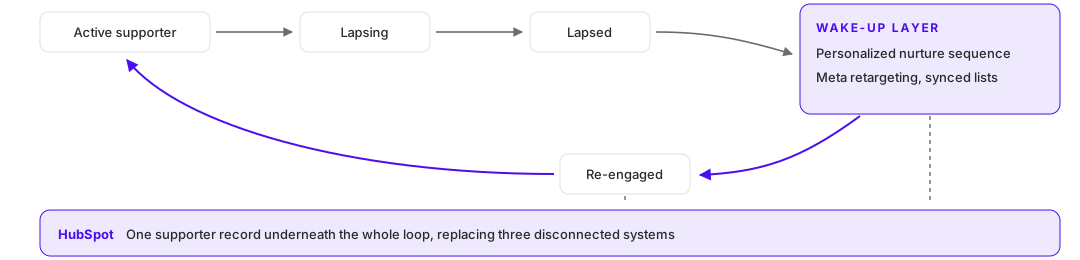
Roughly eight months went into replatforming all of it onto HubSpot, then building the program the new system made possible: lifecycle maps for donors, volunteers, and fundraisers, personalized nurture sequences, and coaching emails that met each fundraiser where their campaign actually stood. Someone who had raised nothing two weeks in got a different email than someone closing in on their goal. Meta retargeting synced against HubSpot lists, so lapsed supporters saw consistent messaging in their feed and their inbox, and dashboards kept the whole thing honest week over week.

The list needed as much attention as the platform. It had gone years without real curation, so sunset policies, engagement tiers, and user-quality assessments ran alongside the replatform from the first month. Fewer, better sends to people who demonstrably wanted them is most of what deliverability means in practice, and it's half the story behind every number in this section.

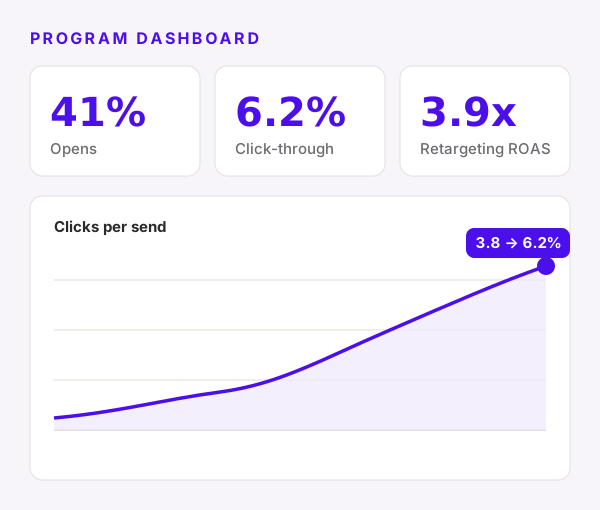
The goal was re-energizing people who had already said yes, not adding names to the list, and the numbers moved the way relationship metrics should: returning fundraiser participation up 18 percent, fundraising page activation up 24 percent, and average dollars raised per participant up 11 percent, with click-through rates climbing from 3.8 to 6.2 percent along the way. The click number is the one I watched. Opens have been directional at best since Apple's privacy changes, so every program on this page was managed to clicks and completed actions instead.

All of it ran inside compliance guardrails that kept moving. CAN-SPAM and GDPR obligations shifted repeatedly across the engagement, and the donor records included minors, which raises the bar on consent, data handling, and what a send is even allowed to say.

What changed

Email open rates from 31% to 41% across the program, with click-through rates rising in step

Meta retargeting returned a 3.9x ROAS against lapsed-supporter audiences

Automated lifecycle campaigns drove 27% of participant registrations during the campaign period

The Re-Engagement Loop
Lifecycle loop diagram: active supporters drift to lapsing and lapsed; a wake-up layer of personalized nurture and synced Meta retargeting returns them to re-engaged and active, with HubSpot as the single supporter record under the whole loop.
New Brand
CRM Architecture Email Education

Launching a New Mission Brand

An established national nonprofit was launching a new education and advocacy initiative with its own name, audience, and voice. The initiative needed to stand on its own while still borrowing credibility from the parent brand, and it needed marketing infrastructure that would outlive the engagement, not a campaign that would run once and evaporate.

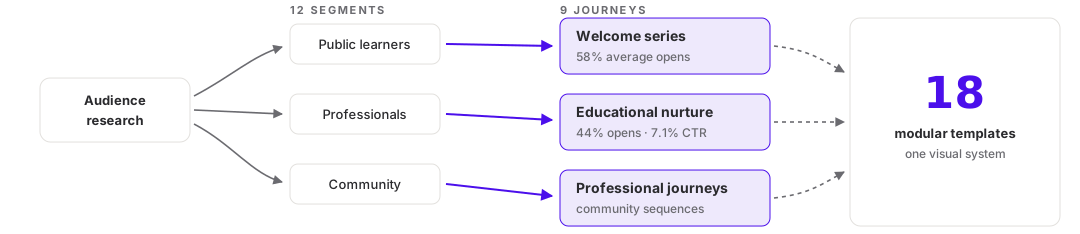
The build started with audience research and worked outward: CRM architecture in HubSpot, twelve audience segments, and nine complete lifecycle journeys covering everyone from first-time visitors to the professional community the initiative served. Eighteen modular email templates gave the team a system rather than a stack of one-offs, and the whole thing shipped with documentation and an implementation playbook written for the people who would run it after me.

It worked as a launch, and it kept working as a program. The welcome series averaged a 58 percent open rate against a nonprofit sector average in the mid-twenties, the educational series held 44 percent opens with a 7.1 percent click-through, newsletter subscriptions grew 36 percent during launch, and resource downloads rose 42 percent. At handoff the team adopted the governance and campaign framework in full, which was the real goal.

What changed

Nine lifecycle journeys and twelve audience segments, built from research out

58% average opens on the welcome series; 44% with 7.1% click-through on the educational series

Eighteen modular templates plus a playbook the team adopted in full at handoff

Audience Map, Research Out
Audience map: research branches into twelve segments across public learners, professionals, and community, feeding nine journeys including a welcome series at 58 percent opens and an educational nurture at 44 percent opens and 7.1 percent click-through, all carried by eighteen modular templates.
From Zero
HubSpot Marketing Ops Product

A CRM Foundation Before Day One

A sports gaming platform was heading toward launch with no customers, no data, and no marketing infrastructure. Everything the other projects on this page had to inherit, good and bad, this one was missing entirely: the assignment was a complete HubSpot environment ready to support acquisition, onboarding, engagement, and retention from the first user onward.

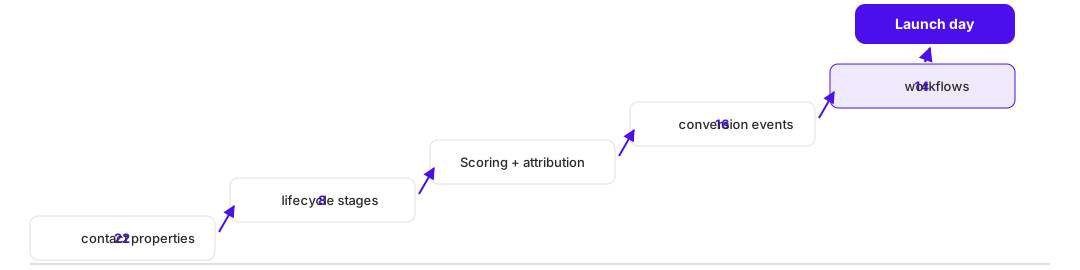
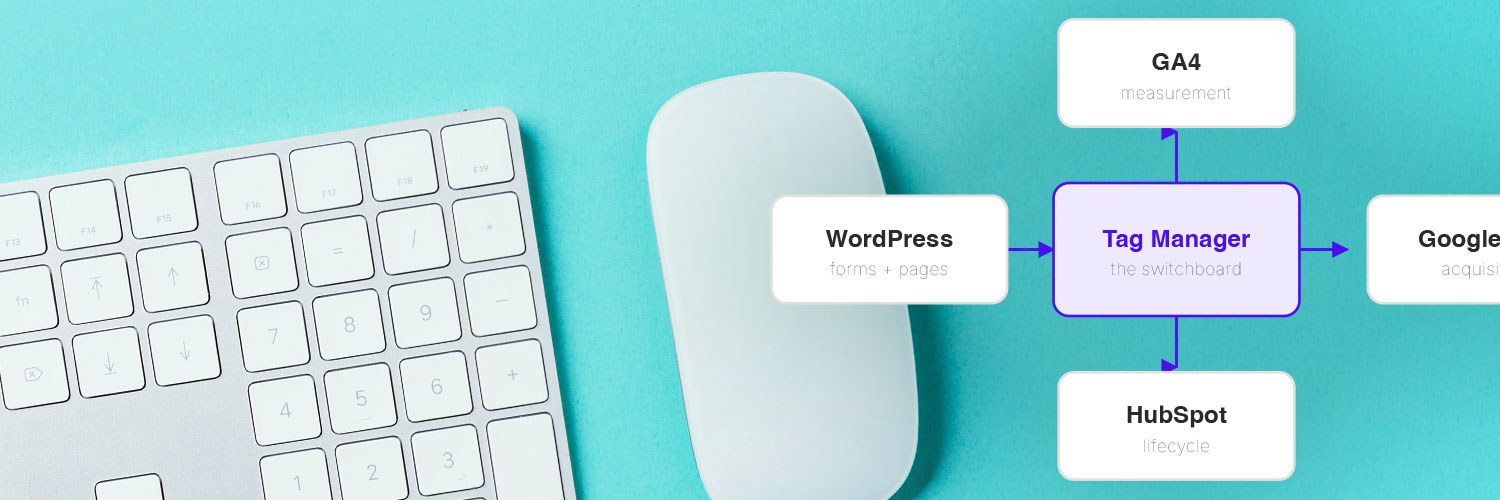
That meant designing the invisible parts first. Twenty-two custom contact properties and eight lifecycle stages so the data would mean something, a lead scoring model, marketing attribution, and sixteen tracked conversion events wired through Google Tag Manager. On top of that foundation went fourteen automated workflows, ten email templates, and the onboarding journeys that carry a new user from registration through verification to their first deposit.

Success here wasn't a growth number. The product hadn't launched yet, so the measure was implementation quality: whether the internal team could take the keys and start optimizing on day one instead of building. They could. The engagement closed with dashboards, governance documentation, and training already in place.

What shipped

14 automated workflows covering onboarding, promotion, and re-engagement

22 custom contact properties across 8 lifecycle stages, with lead scoring on top

16 conversion events wired for attribution before a single user existed

Built From the Ground Up
Foundation stack: twenty-two custom contact properties, eight lifecycle stages, lead scoring and attribution, sixteen conversion events, and fourteen automated workflows stepping upward to launch day.
The Outcome
31% → 41%
Open rates across the re-engagement program, with click-through up from 3.8 to 6.2 percent
58%
Average opens on the new brand's welcome series, against a sector norm in the mid-twenties
36+
Automated lifecycle workflows built across the three platforms, 44+ templates riding on them
Built to outlast the engagement
3

CRM platforms taken from scattered, or nonexistent, to fully operational.

One rebuilt in place around a community that already existed, one launched alongside a brand-new mission, one stood up before the product had a single user.

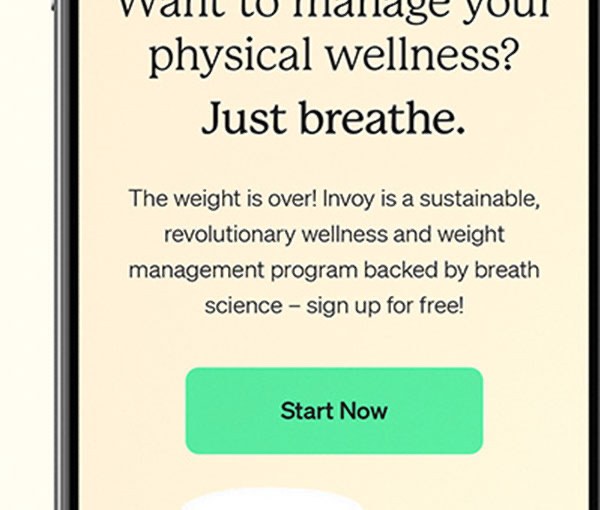
A wellness-program email on a phone: Want to manage your physical wellness? Just breathe, above a Start Now button.
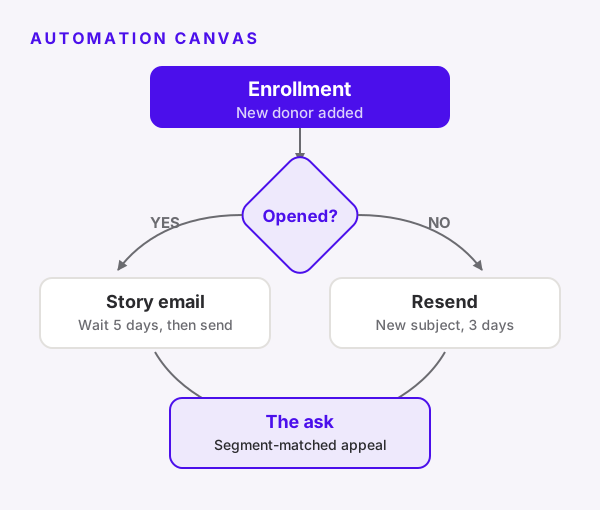
A HubSpot-style automation canvas: a new-donor enrollment trigger branches on whether the welcome email was opened, with a story email on the yes path, a resend with a new subject on the no path, and a segment-matched ask downstream.
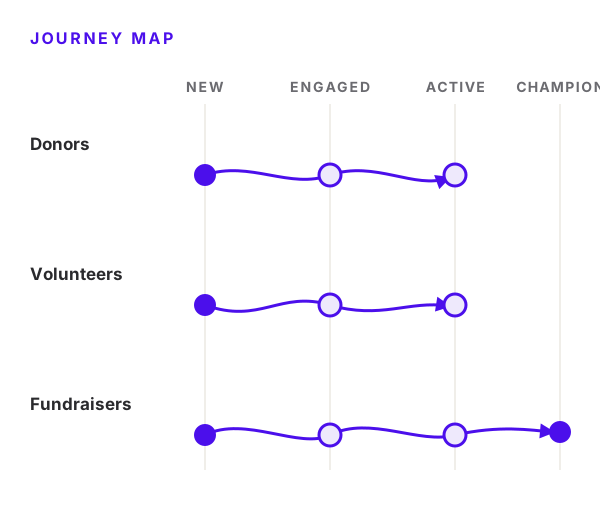
Journey map: donors, volunteers, and fundraisers each moving along their own automated path through new, engaged, active, and champion stages.
Program dashboard: 41 percent opens, 6.2 percent click-through, 3.9x retargeting return on ad spend, and clicks per send climbing from 3.8 to 6.2 percent.

Scope of
Involvement

Strategy through execution: architecture, segmentation, automation, template systems, governance, and the training that let each team run the program after handoff.

9Lifecycle journeys
12Audience segments
8Lifecycle stages
Takeaways

What Three Builds Taught Me

Every number on this page came from relevance, not volume. None of these programs sent more email than what came before them, and open rates still climbed, because segmentation meant the right people got the right message and automation meant it arrived at the right moment. The fastest way to grow an email program is to stop treating the list like one audience.

None of it was a first draft, either. Every build shipped with tests in the initial setup and kept testing after launch, so the numbers above are where iteration landed, not where instinct started.

The platform is half the job. A CRM implementation that ends at configuration is a contact list with a subscription fee. What made these three work was everything layered on top of the software: the journeys, the templates, the governance, and content people open on purpose, written in the organization's own voice.

And build for the handoff from the first day. Documentation, training, and governance are not the boring appendix of a CRM project. They're the difference between a program that compounds after you leave and one that decays. Two of these three engagements ended in a clean handoff, and the framework was adopted in full both times. The third was my own seat, and the same rule applied: the system had to be one anyone could run.

More Work