← Back to all work
A flat marketing illustration in orange: a search bar, an analytics dashboard, rising bars, and a magnifying glass. Paid Media

Taking underused ad grants to the cap

Clients
Three organizations, names withheld
Role
Paid media strategy & account operations
Systems
Google Ad Grants, Google Ads, Meta & GA4
Focus
Utilization, compliance & return
Channels Paid Search Paid Social Retargeting
Tools Google Ad Grants Google Ads Meta Ads Google Analytics
Practice Keyword Strategy Negative Keywords Conversion Bidding Compliance
Scope Three engagements In-house & consulting
Overview

The Discipline

Paid media has a reputation for being the easy lever: put money in, get traffic out. That has not been my experience of it. Every paid dollar I have managed belonged to someone with a sharper claim on it: a donor who meant it for the mission, a grant with rules attached, a business watching its own runway. Spending scrutinized dollars well is a different discipline than spending big ones fast.

Most of this page is about the Google Ad Grant, the $10,000 a month in search advertising Google gives eligible nonprofits. Nearly every nonprofit has heard of it. Very few use it. The money arrives with strings: a click-through floor the account has to hold, conversion tracking it has to prove, keyword rules it has to follow, and none of it spends itself. In practice, most grant accounts idle at a third of their value, set up once by someone long gone and never touched again. I have rebuilt two of them to near the cap, at two different organizations, and the pattern of neglect was the same both times.

The method is account hygiene. Search-term reviews that feed a standing negative-keyword list. A clean split between brand and non-brand terms. Bidding pointed at conversions the account can actually see, and landing pages that give the click somewhere worth arriving. Grant or no grant, that is just paid search done properly, which is why the same discipline transferred when the dollars were bought instead of granted.

As elsewhere on this site, client names are withheld from the copy. The numbers are real, and the work is described exactly.

Grant Rebuild
Ad Grants Paid Search Retargeting

Reviving an Underused Ad Grant

A national nonprofit had held a $10,000 monthly Ad Grant for about five years and was spending roughly $4,100 of it. An outside agency had configured the account around 2019; after that engagement ended, it got only light maintenance. What I inherited was twelve campaigns and some two hundred keywords, mostly broad match, with duplicated themes, outdated ad copy, and almost no active conversion goals. Click-through drifted in the mid-fives, a slow month above the program's 5 percent floor, while policy recommendations piled up inside the account, unread.

The rebuild started with the plumbing. Conversion tracking went in through Tag Manager so the account could finally see what mattered, with the donation confirmation page as the primary event and newsletter signups, event registrations, and volunteer interest counted behind it. Bidding started on Maximize Conversions and moved the highest-volume campaigns to Target CPA once tracking matured. The keyword estate was rebuilt around terms the organization could genuinely own, split cleanly between brand and non-brand, with a standing search-term review feeding the negative list that keeps grant traffic honest.

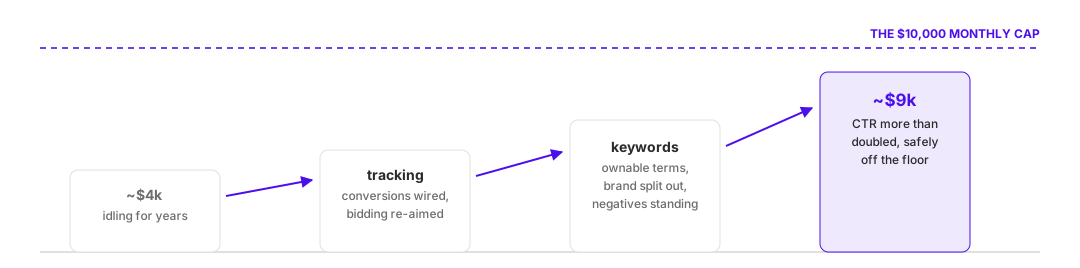
The clicks also needed somewhere worth landing. Donation, volunteer, and event pages were rebuilt around simpler calls to action, fewer distractions, cleaner mobile layouts, and faster loads. Average Quality Score rose from 5.8 to 7.6, with the highest-volume keywords reaching 8 to 10. Utilization climbed from about $4,100 to about $9,000 a month over six months, click-through more than doubled, and tracked conversions went from about 140 a month to about 255.

Paid social ran as the grant's counterpart at the other end of the funnel: five months of Meta retargeting at $1,200 to $1,800 a month against first-party audiences the organization already owned, from abandoned donation visitors to past volunteers and event participants. No lookalikes needed. It returned 3.9x against confirmed online donation revenue, and between them the paid channels assisted roughly a third of new email subscribers, with email captures up 47 percent. Where those subscribers went next is its own page.

What changed

Monthly utilization from about $4,100 to about $9,000 in six months, against the $10,000 cap

Tracked conversions from about 140 to about 255 a month, with Quality Score up from 5.8 to 7.6

3.9x ROAS on five months of Meta retargeting, measured against confirmed donation revenue

The Utilization Ramp
Grant utilization ramp: about four thousand dollars a month idling for years, then conversion tracking wired and bidding re-aimed, then keywords rebuilt around ownable terms with brand split out and standing negatives, reaching about nine thousand a month with click-through more than doubled, under the ten thousand dollar monthly cap.
To the Cap
Ad Grants Compliance Measurement

Taking a Second Grant From a Third to the Cap

A second nonprofit, midway through a broader marketing-operations engagement, turned out to be using about 30 percent of the same grant. The account had been created by a regional agency and predated everyone still on staff; nobody internally understood its structure anymore. Nothing it did was visible in analytics, and click-through sat at 4.1 percent, one slow month from the program's floor. This is the normal condition of a nonprofit Ad Grant, and it is why the program has a reputation it does not deserve: the money is fine. The accounts are abandoned.

The sequence was deliberate: validate analytics, wire conversion tracking, then consolidate campaigns and clean the keywords before touching a single ad. Conversions imported into Google Ads gave bidding a target. Then the ads themselves were rebuilt, two to three responsive search ad variants per campaign, testing mission language against urgency against benefit-first messaging. Roughly 60 percent of the click-through gain came from keyword pruning and 40 percent from the new ads: 4.1 to 8.1 percent, with utilization reaching 94 percent of the cap over seven months.

Like everything in that engagement, it was built to be handed off: governance documentation, a monthly optimization checklist, campaign naming standards, a keyword review process, a dedicated Ad Grants dashboard, and a training session to hand it over. Six months later, utilization was still above 90 percent on the team's own optimization rhythm. A grant is not a one-time fix. It is a small account that has to stay healthy forever, and the handoff decides whether it does. The rest of that engagement has its own page too.

What changed

Grant utilization from about 30% to 94% of the monthly cap in seven months

Click-through from 4.1% to 8.1%, double the compliance floor, on pruning plus rebuilt ads

Still above 90% utilization six months after handoff, on the team's own rhythm

The Compliance Loop
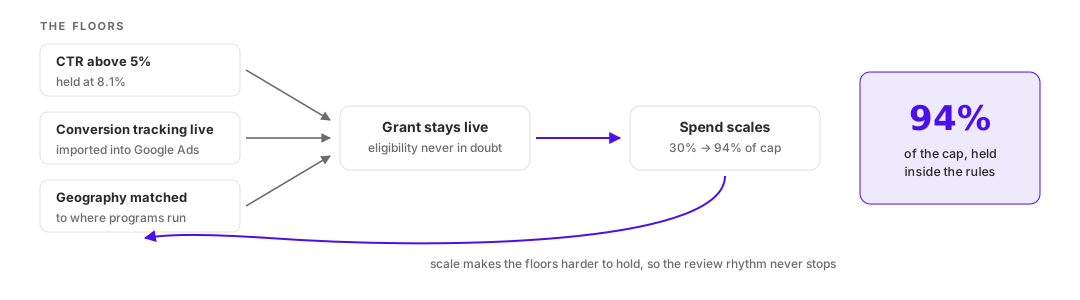
Compliance loop: three floors, click-through held at 8.1 percent against the 5 percent minimum, conversion tracking imported into Google Ads, and geography matched to program areas, keep the grant live, which lets spend scale from 30 to 94 percent of cap, which in turn makes the floors harder to hold, so the review rhythm never stops.
Bought Dollars
Google Ads Meta Attribution

Building the Rails for Commercial Spend

A sports gaming platform was four months from launch, with acquisition budgeted at $15,000 to $25,000 a month across Google Search, Meta, and email, and nothing underneath it: no tracking, no attribution, no way to know which dollar did what. Granted money forgives slow learning. Bought money does not, and this spend was going to start on day one.

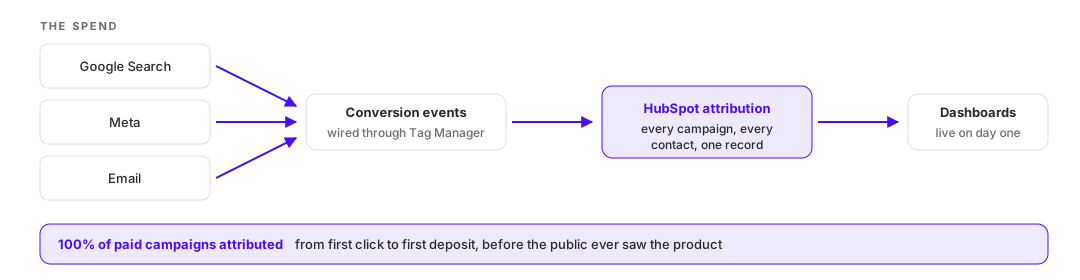
My job was the architecture underneath the spend. Conversion tracking wired through Tag Manager, campaign attribution flowing into HubSpot so every paid click attached to a contact record, dashboards that read from the source, and the lifecycle automation that caught what acquisition brought in, from signup through verification to first deposit. The full measurement chain was documented and taught, so the team could judge every campaign against a defined acquisition cost from its first impression.

At launch, 100 percent of paid campaigns flowed through attribution, and onboarding, activation, and promotional journeys were live to receive them. The success here was readiness: a commercial acquisition program that opened its doors already knowing how to count. Grants reward precision and stewardship of limited inventory; commercial campaigns reward efficient growth against a defined cost. Same discipline, different constraint, and the measurement is what lets either kind of dollar work harder.

What shipped

$15k to $25k a month across Google and Meta, running on measurement built here

100% of paid campaigns wired into HubSpot attribution before the public launch

Acquisition dashboards live on day one, from first click to first deposit

The Attribution Path
Attribution path: Google Search, Meta, and email spend flows through conversion events wired in Tag Manager into HubSpot attribution, where every campaign attaches to a contact record, feeding dashboards live on day one, with 100 percent of paid campaigns attributed from first click to first deposit before the public launch.
The Outcome
$4k → $9k
Monthly grant utilization in six months at the first nonprofit, with click-through more than doubled
94%
Of the monthly cap reached at the second, from 30% in seven months, and still above 90% after handoff
3.9x
Return on ad spend from Meta retargeting, synced against the CRM's lapsed audiences
Free money, run like bought money
$20k

In monthly Ad Grant caps, run like bought media.

Two grants at two organizations, each held to the standard a paid account answers to: seen conversions, pruned terms, and floors cleared with room.

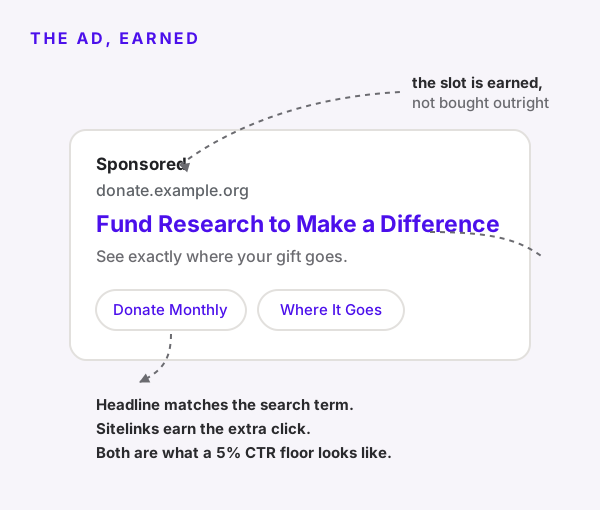
Anatomy of an earned search ad: the headline matches the search term, sitelinks earn the extra click, and both are what a five percent click-through floor looks like in practice.
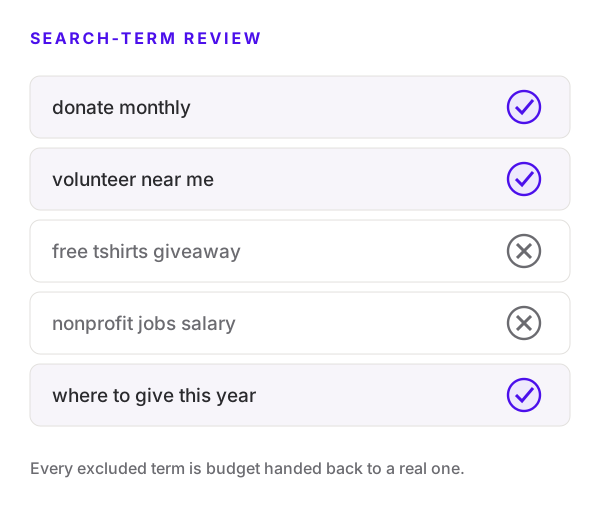
A search-term review: donate monthly, volunteer near me, and where to give this year kept; free tshirts giveaway and nonprofit jobs salary excluded. Every excluded term is budget handed back to a real one.
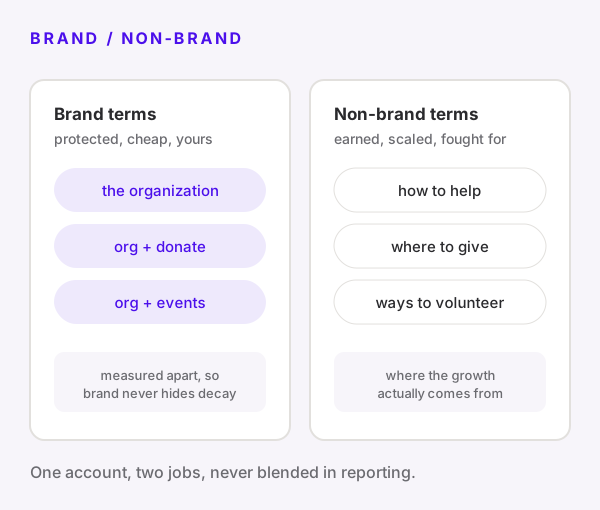
Brand and non-brand keywords split into two columns, measured apart so brand traffic never hides decay and growth is visibly earned from non-brand terms.
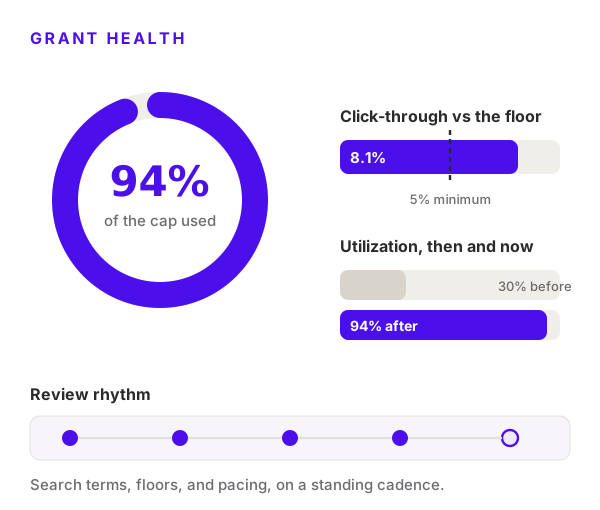
Grant health dashboard: 94 percent of the cap used, click-through at 8.1 percent against the 5 percent minimum, utilization at 30 percent before and 94 percent after, and a standing review rhythm.

Scope of
Involvement

Strategy through operations: keyword architecture, ad copy, conversion bidding, compliance, measurement, and the review rhythm that keeps a grant alive after handoff.

2Grants rebuilt
5%CTR floor, held
7.6Avg Quality Score
Takeaways

What Scrutinized Dollars Taught Me

The Ad Grant is the best test of paid discipline I know, because it removes the excuse. The money is free, so only the practice decides whether it converts. Both rebuilds came down to the same four chores: see the conversions, bid toward them, prune what the search terms drag in, and hold the floors with margin. Nothing on this page required a bigger budget. It required the budget to be taken seriously.

Compliance turned out to be a feature. The program's floors exist to force nonprofits to run real accounts, and treating them as a design constraint rather than a hoop is what kept both grants safe while they scaled. An account built to survive its rules is simply a well-run account.

And paid never works alone. The grants filled the top of the funnel while retargeting worked the bottom, and both only mattered because the measurement underneath them was trusted and the follow-up was ready. Media buys the click. What an organization does with it is the other half of the job, and that half is the rest of this site.

More Work