← Back to all work
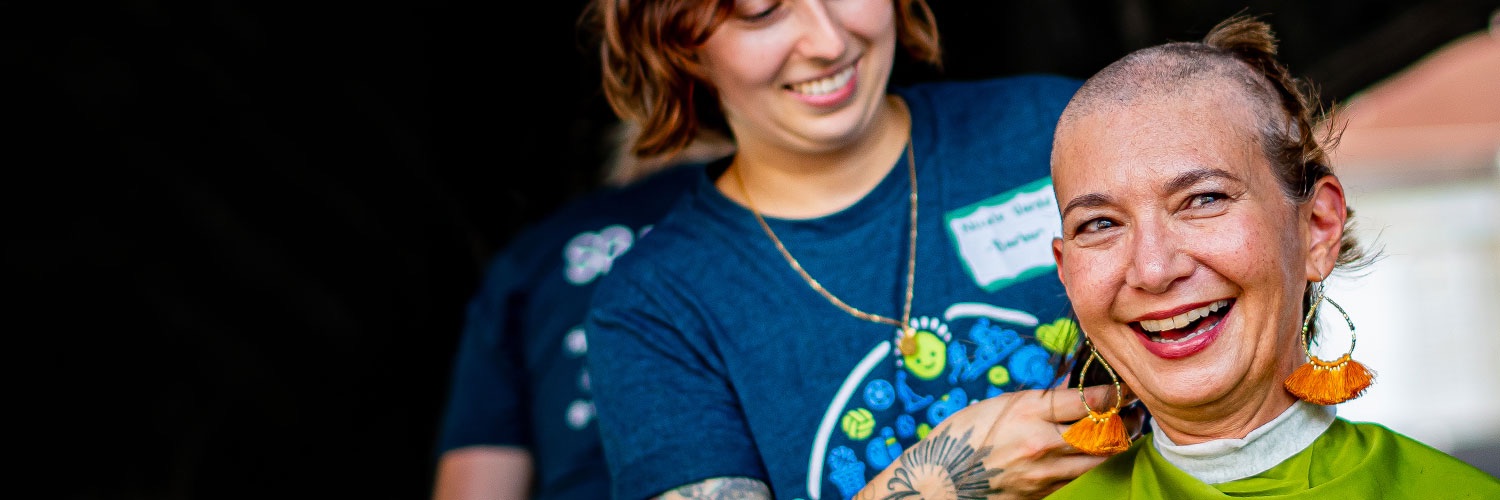
A laughing participant mid head-shave at a St. Baldrick's event while a volunteer barber runs clippers over her head. St. Baldrick's

Turning search traffic into childhood cancer research funding

Organization
The St. Baldrick's Foundation
Role
Digital Marketing & Brand Lead
Timeline
Apr 2023 – Feb 2026
Focus
Brand, SEO & Donor Growth
Channels Web Email Social Paid Search
Tools HubSpot WordPress Google Analytics Google Ads
Scope In-house Solo lead
summarize Overview

The Opening

I came to St. Baldrick's sideways, in 2009. A friend was involved and pulled me in, which is how most people get here.

I wasn't a marketer to them. I was a shavee, the name for the people who let someone take clippers to their head in a bar full of strangers to raise money for childhood cancer research. I did it sixteen separate years. Somewhere in there I started volunteering. Eventually I was hosting events.

So I knew what the brand was long before I ever worked on it. I knew it in the room: the noise, the terrible jokes, someone's mother deciding on the spot, unplanned, that she was going to shave too, just because she'd been moved to. Nothing in this work is more powerful than watching that happen.

Which is why, in 2023, when a web role opened that was frankly below my skill level, I took it anyway. I'd watched the brand start to lose the thing that made me fall for it. The joy was draining out of it. And I thought I might be the only person applying who could see that from the inside.

The Challenge

Nobody had ever owned the digital presence as a whole. It had been built the way most nonprofit websites get built: as needed, by whoever was there, solving whatever was in front of them that quarter. What I inherited was sediment. Years of half-finished projects from people long gone, no single mind behind any of it.

The deeper problem was the voice. St. Baldrick's fundraising engine is an in-person event in March, and those events are loud, funny, and full of love. The marketing sounded like a form letter. It asked for money without ever making a case, which landed flat with existing donors and did nothing at all for new ones. COVID had taken the events out at the knees, and the base never came back on its own. Rebuilding it was a standing part of the job.

My Role

I led digital marketing and brand: not a single channel inside a larger team, but the full thread from web strategy and SEO through donor storytelling, campaign launches, and paid search. The platform was not small. Roughly half a million monthly sessions, peaking near a million, across more than two hundred marketing pages and tens of thousands of individual fundraiser pages a year, since every volunteer runs their own. The scope kept widening because the brand needed one person holding strategy, analytics, and creative together, so I took the creative lead as well, extending the brand into merchandise, email, print, large-format signage, video, and one-off web experiences.

The Approach

01

Clean up what was there

The first ninety days were an Ahrefs audit, top to bottom. I went through the entire inherited ecosystem, killed dead projects and orphaned pages, cut file sizes and unused code, and lifted site health substantially, complicated by a site that is largely user-generated because every volunteer runs their own page.

02

Make the data trustworthy

Consolidated outdated services, which improved site health and cut cost at the same time, then fixed the measurement layer: double-counted sessions, conversions that were broken or stale, and services that weren't speaking to each other. You cannot make a decision on data you don't trust.

03

Put conversion at the center

Migrated the organization onto HubSpot as its central CRM and tracking system, then built the storytelling to feed it: researcher spotlights and family stories that gave people a specific reason to act. The goal was one continuous experience aimed at both new participants and lapsed ones.

04

Rebuild the brand where people touch it

Launched and supported campaigns across the calendar, Send Kids Cancer Packing and National Cancer Survivors Month among them, then carried the visual identity into everything the events actually put in people's hands, from shirts to signage to video.

palette Brand Foundation

Where the Brand Was

A decade of well-meaning people had each solved their own problem, and nobody had ever asked what the whole thing was supposed to be. The gap that mattered most wasn't visual. It was between how the events felt and how the marketing sounded.

Digital built as-needed for years; no one had ever owned the presence as a whole
Layers of inherited work from rotating owners, with no single source of truth
Voice asked for money without making a case; flat with donors, deadly with new ones
Analytics double-counting, conversions broken or stale, services not speaking to each other
Event merchandise had lost the brand's joy; shirts nobody would wear twice
The St. Baldrick's Foundation logo lockup with its tagline.

Brand Voice

Closing the gap between the room and the mailing meant deciding what the voice was allowed to do. These four tenets are what came out of it: make what people read sound like what they felt at the event, and then actually ask them for something.

Joy is the strategy

The goofiness isn't decoration on top of a serious cause. It's the reason people come back. A brand built on shaving your head in solidarity should never sound like a hospital bill.

Always make the case

Every ask names what it buys. "Give us money" is not a case. A donor who knows what their gift funds gives again. One who doesn't, doesn't.

Solidarity, never pity

Kids are not the pitch. Nobody gets guilted, nobody gets sensationalized. You shave your head because you're standing with someone, not because you feel sorry for them.

The story doesn't end at remission

Survivors carry the treatment for life. A brand that only talks about cures and never about quality of life is telling half of its own story.

Brand Archetypes

Most childhood cancer organizations run Hero and Caregiver and stop there. St. Baldrick's has a third that nobody else can credibly claim, and losing it was exactly what was going wrong. The tension is the whole brand: the Jester keeps the Hero from turning grim and the Caregiver from turning pitying. Take it out and you're every other cancer charity.

Jester
Fun as defiance. The goofiness isn't decoration on a serious cause, it's the reason people come back.
Hero
Fund the cure. Every ask names the research it buys, so the case makes itself.
Caregiver
Stand with the families. Solidarity, never pity. You shave because you're standing with someone.
Jester
Hero
Caregiver

St. Baldrick's is the only childhood cancer organization where the fundraiser is also the statement.

You don't buy a ticket and go home. You walk out visibly changed and carry it around for a month while people ask you why. It funds the research, and the research is the point. But what it actually offers is the rarest thing in this category: permission to laugh. Kids with cancer never got a choice about losing their hair. Everyone in that room chose it, on purpose, in public, and had a genuinely good time doing it. That isn't a fundraising mechanic. It's the most human thing an organization in this space can offer, and nobody else can own it at this scale.

flag Key Initiatives
SEO Analytics Technical

Organic Search Strategy & Site Performance

The St. Baldrick's site had organic potential it wasn't capturing. Keyword strategy alone wasn't enough. Search ranking and donor conversion both depend on the same underlying technical health. Page speed, site structure, and metadata were worked together, not in sequence.

A 2-second improvement in average page load time is easy to underestimate. For a nonprofit, it's the difference between a donor completing a gift form and leaving before the page finishes loading.

What changed
trending_up

Ahrefs Site Health from 56 to 91, clearing years of crawl, metadata, canonical, and sitemap debt

speed

Average page load from 4.6s to 2.8s, with Core Web Vitals passing on most core templates

search

Non-branded organic traffic up roughly 40 percent, concentrated in top-of-page rankings

Analytics GTM GA4

Analytics & Measurement, Rebuilt From Scratch

You cannot optimize what you cannot see, and the measurement layer had been quietly broken for years. Sessions double-counted. Conversion events that fired wrong, or never fired at all. Services that had no idea the others existed. Every decision above it was being made on numbers nobody should have trusted.

So I rebuilt it. A full Google Tag Manager implementation, GA4 repaired and made trustworthy, and conversion tracking extended from covering a fraction of the site to nearly all of it. Then standardized dashboards on top, so the organization could answer its own questions without waiting on me to export a spreadsheet. This is the least visible work on the page and the part everything else depends on.

What changed
tag

A from-scratch Google Tag Manager build, with 120+ tracked events across the platform

conversion_path

Conversion tracking extended from covering about a fifth of the site to nearly all of it

dashboard

Standardized marketing dashboards that replaced ad-hoc, manual reporting

Email CRM Storytelling

HubSpot Implementation & Donor Nurture Program

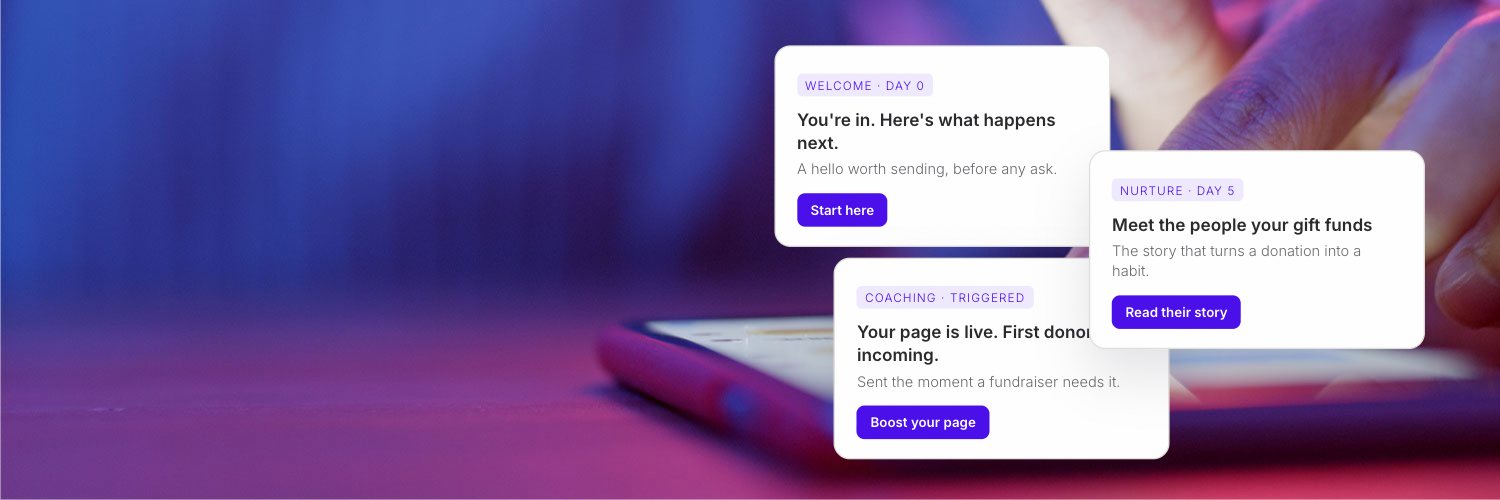
Led the migration onto HubSpot as the organization's central CRM and tracking system, consolidating a scatter of disconnected services into one place that could actually see a donor's whole journey. The platform was only half of it. The other half was the nurture sequences, segmentation logic, and storytelling that gave it something worth sending.

The distinction between a donor database and a donor relationship program is the content in between. Segmented sequences for donors, volunteers, and event participants kept each group receiving something relevant, anchored in researcher spotlights and family stories rather than another appeal.

What changed
hub

Migrated a scatter of disconnected services onto HubSpot as the central CRM

mediation

25+ marketing workflows automated, with lead routing and form capture centralized

volunteer_activism

Researcher and family-story program built to carry the ask, not decorate it

Paid Search Grants

Google Ad Grants, Implemented Properly

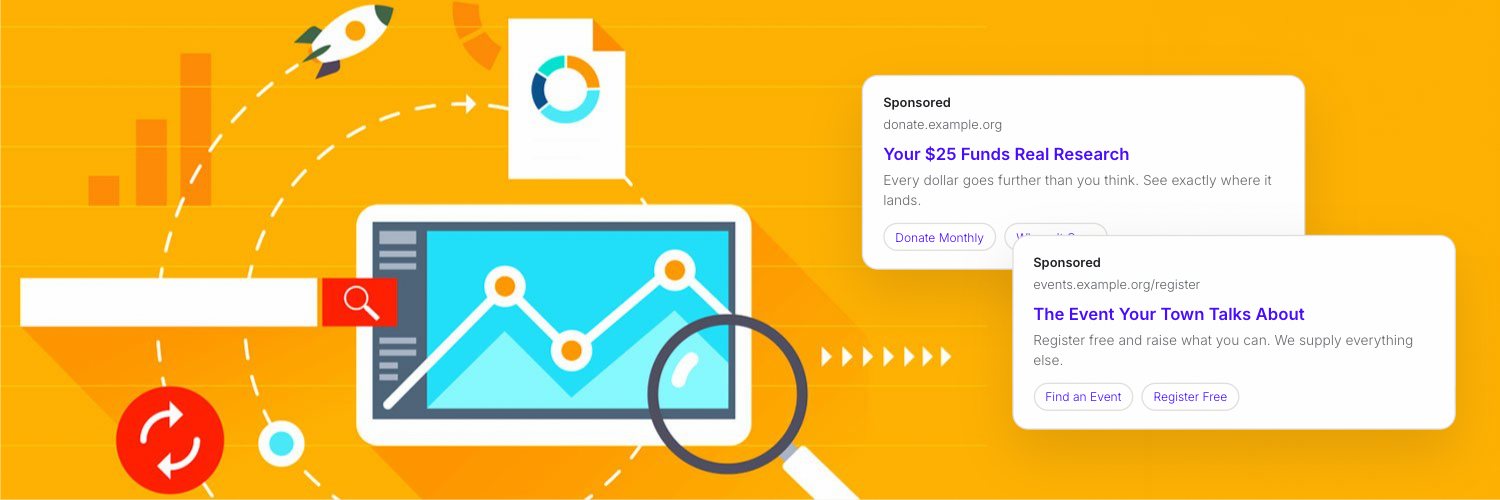
The Google Ad Grants program gives eligible nonprofits up to $10,000 per month in free search advertising. St. Baldrick's was already enrolled. It just wasn't working. The campaigns bid on terminology someone had once decided were our prized search terms, without much evidence, and they weren't bringing anyone to the site in a way that mattered. Nothing was wired into GA4 or GTM with any real thought, so there was no way to tell what was or wasn't landing.

I led the SEO side of the audit and the rebuild: making sure the plumbing worked, that the terms we targeted were both relevant and genuinely ownable, and that the grant was being used to something near its actual potential. Getting approved is the easy part. Using it is the work.

What changed
redeem

An underused $10k/month grant rebuilt around relevant, ownable search terms

payments

Monthly utilization from about $4k to roughly $9k, near the full grant

ads_click

Click-through rate more than doubled once targeting and tracking were fixed

Conversion Was the Whole Point

A nonprofit site can post a beautiful traffic chart and not fund a single additional day of research. Sessions aren't the product. A completed gift is. Most of my time went into the gap between those two things.

That gap is why the efforts above were one job rather than four. Organic search decided who arrived. The Ad Grants rebuild decided whether the paid half of that traffic had any reason to be there. The analytics layer decided whether we could see any of it clearly enough to act on. HubSpot decided what happened after someone gave. And all of it collapses in the same few places: a gift form that takes too long to load, a visitor who searched for one thing and landed on another, a tracking setup reporting conversions that never happened.

So the work was mostly unglamorous. Cutting weight off the templates donors actually transact on. Matching search intent to landing pages on both the paid and the organic side, so the traffic arriving had a reason to stay. Fixing conversion tracking that had been quietly wrong. Building the researcher and family stories that carried the ask rather than decorating it.

It added up the way that kind of work does, quietly. Double-digit lifts in donation and registration conversion on the templates that carry the most traffic, and fewer people leaving the gift funnel before they finished. The page-load improvement reads like a developer's metric. On a donation form, it's a fundraising one.

trending_up The Outcome
500K–1M
Monthly sessions on the platform, peaking near a million, across 25,000+ fundraiser pages a year
56 → 91
Ahrefs Site Health, after clearing years of accumulated technical SEO debt
0+
Tracked events built into a rebuilt analytics layer, with conversion tracking taken to near-complete coverage

The Other Half

The role was never only search strategy and dashboards. The foundation had designers. What it didn't have was one person holding the brand and the marketing together, so I took the creative lead as well, and carrying both halves is the part of this job I'm proudest of.

It meant the brand could be lifted as a whole instead of in pieces. Campaign identities, the artwork for the annual head-shaving events, merchandise, print, and signage all ran through the same person writing the search strategy and reading the analytics, so nothing drifted between what people saw and what they were asked to do.

Social worked the same way. Local events ran their own outreach, so there were four separate channels to feed, each needing assets built for its own audience. Event promos, calls to register, and the head-shave moments themselves, across design, animation, and video.

Most of the fundraising is done by volunteers running their own pages, so a good deal of the work was giving them something to run with. Templates, graphics, and assets that let a first-time fundraiser look like they had a marketing team behind them.
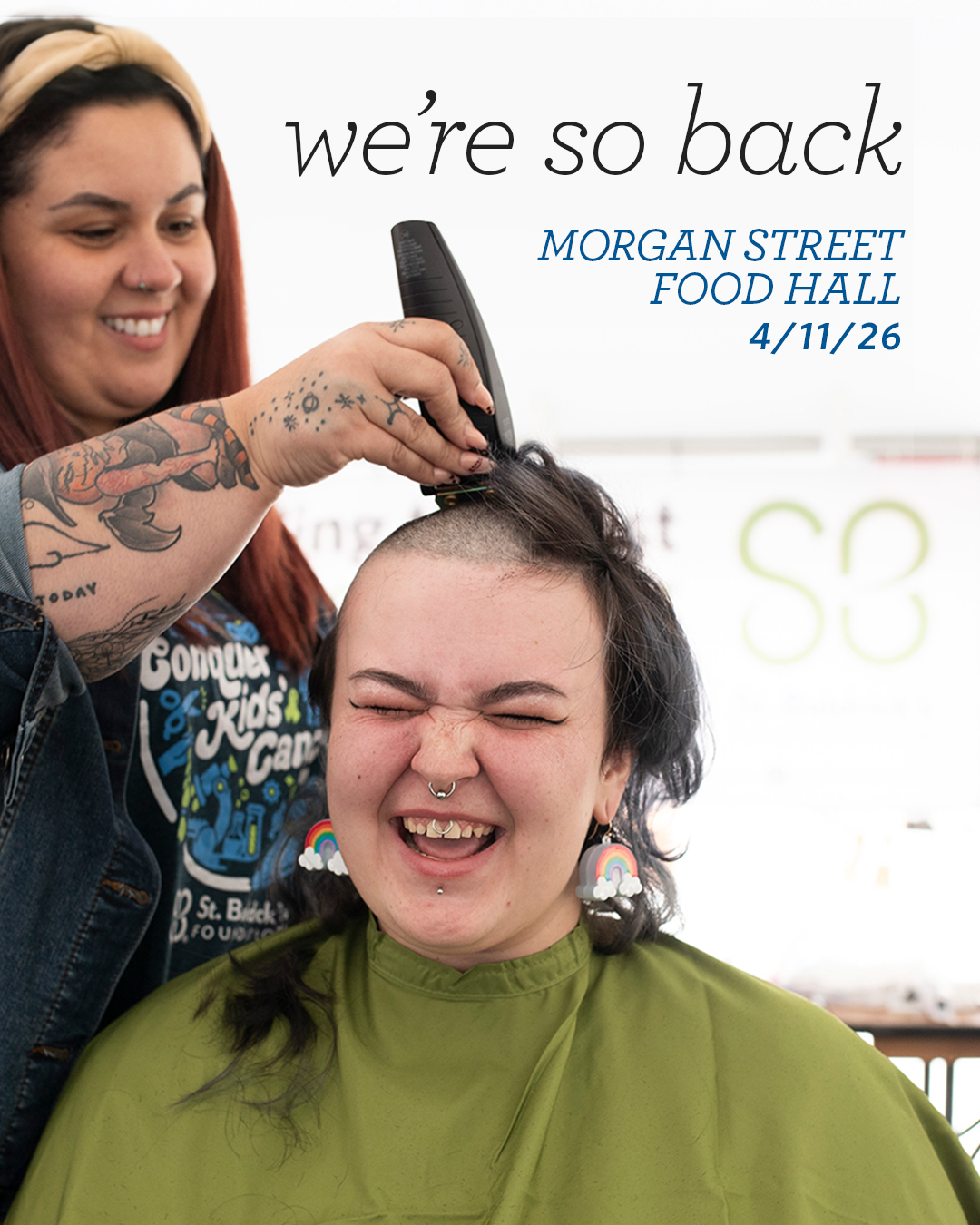
SBraleighstbaldricks •••
Event graphic reading we're so back, Morgan Street Food Hall 4/11/26, over a laughing shavee mid head-shave.
raleighstbaldricks We're so back. Morgan Street Food Hall, 4/11/26. #ConquerKidsCancer
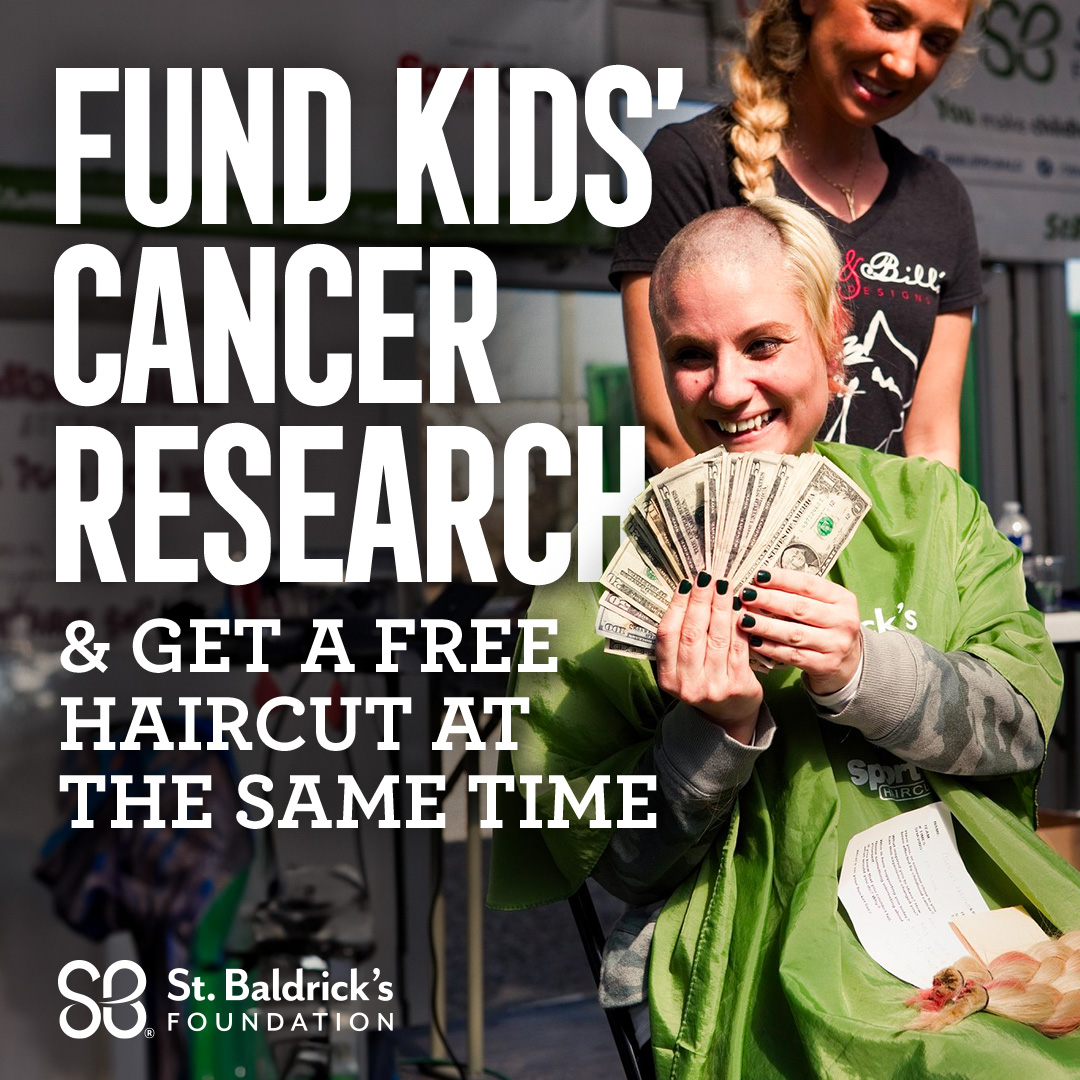
SBraleighstbaldricks •••
Event graphic reading fund kids' cancer research and get a free haircut at the same time, over a smiling shavee holding cash raised, with the St. Baldrick's Foundation logo.
raleighstbaldricks Fund kids' cancer research and get a free haircut at the same time. #ConquerKidsCancer
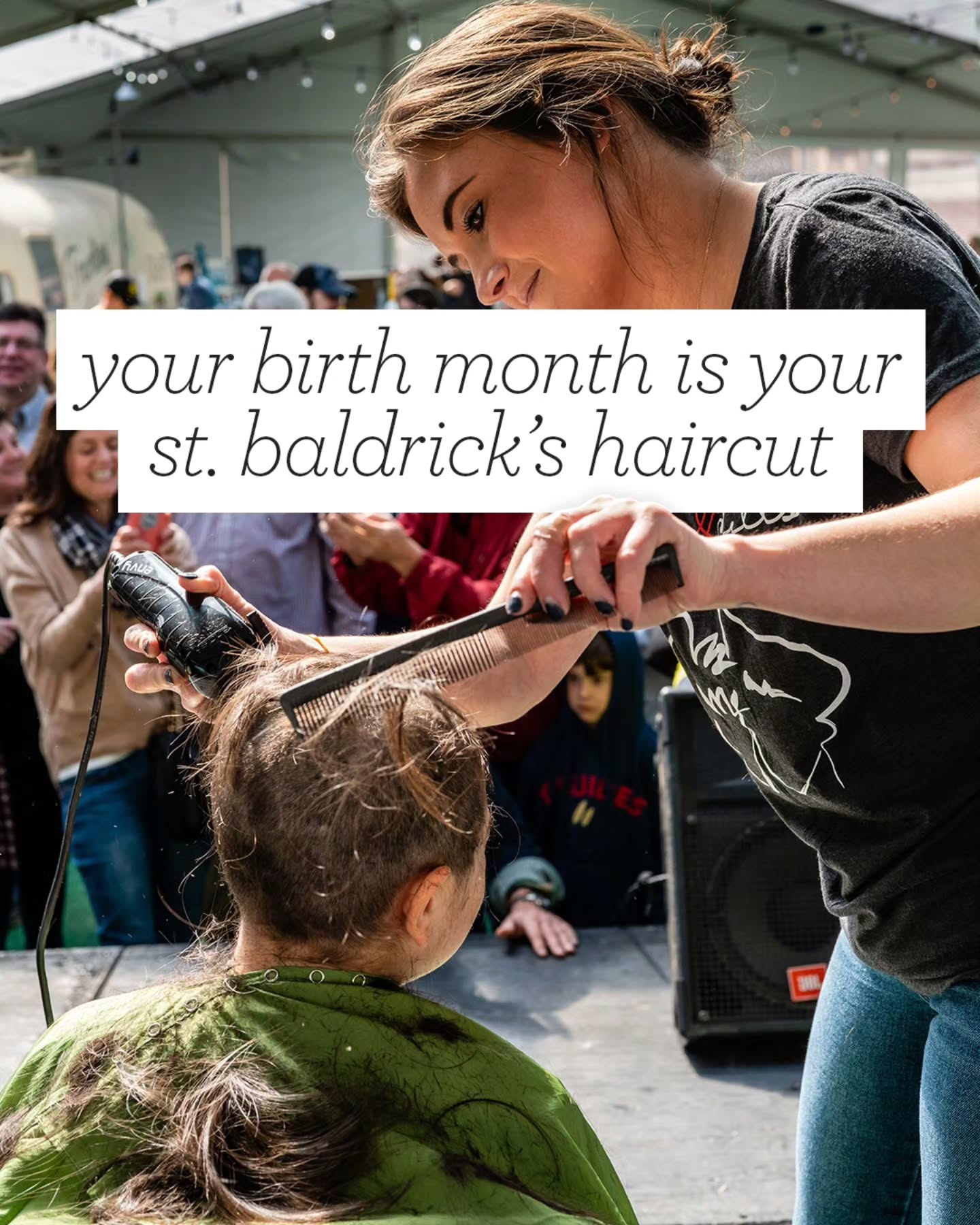
SBraleighstbaldricks •••
Event graphic reading your birth month is your St. Baldrick's haircut, over a stylist shaving a participant on stage.
raleighstbaldricks Your birth month is your St. Baldrick's haircut. #ConquerKidsCancer
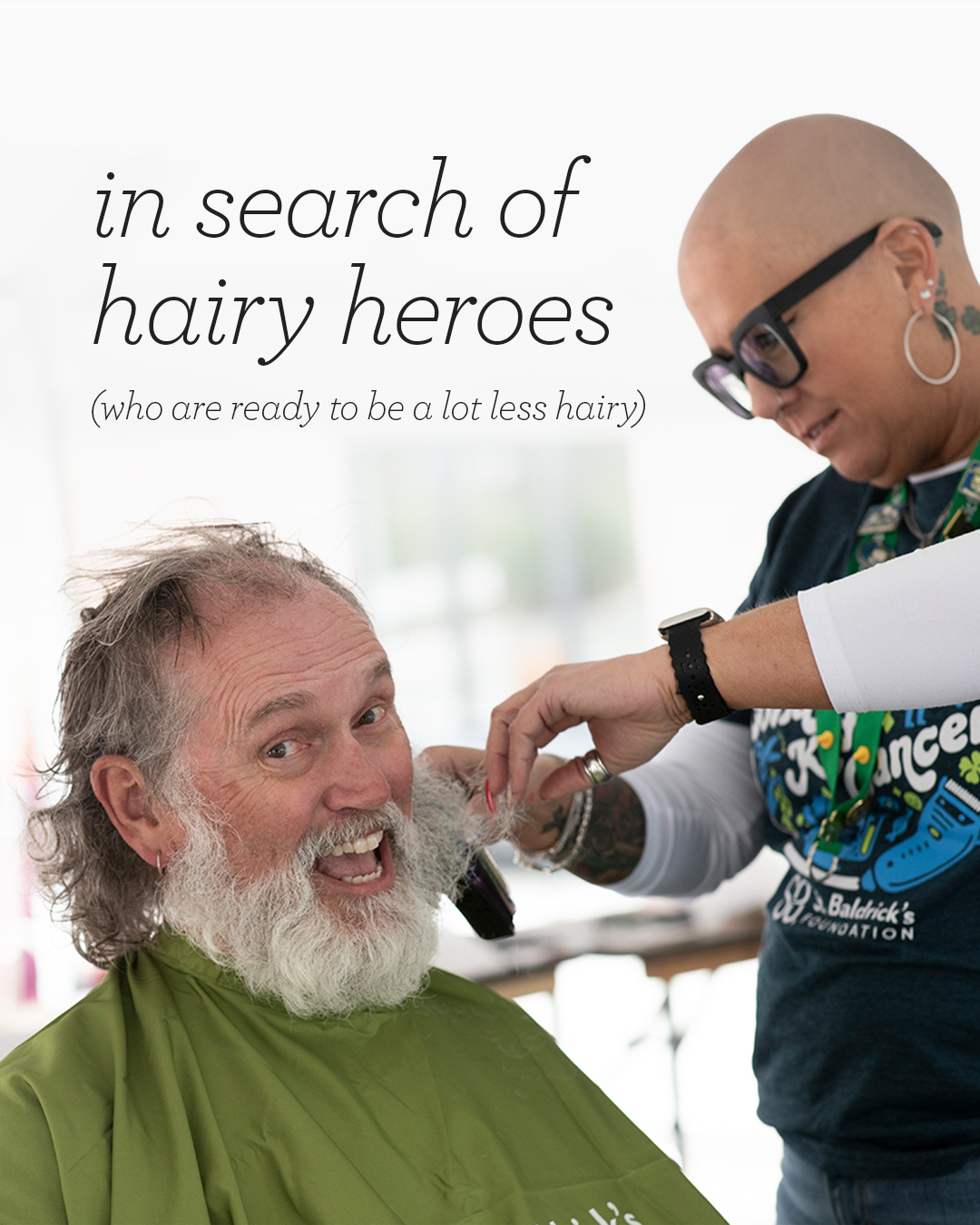
SBraleighstbaldricks •••
Event graphic reading in search of hairy heroes, beside a smiling bald volunteer in glasses.
raleighstbaldricks In search of hairy heroes. #ConquerKidsCancer
SBraleighstbaldricks •••
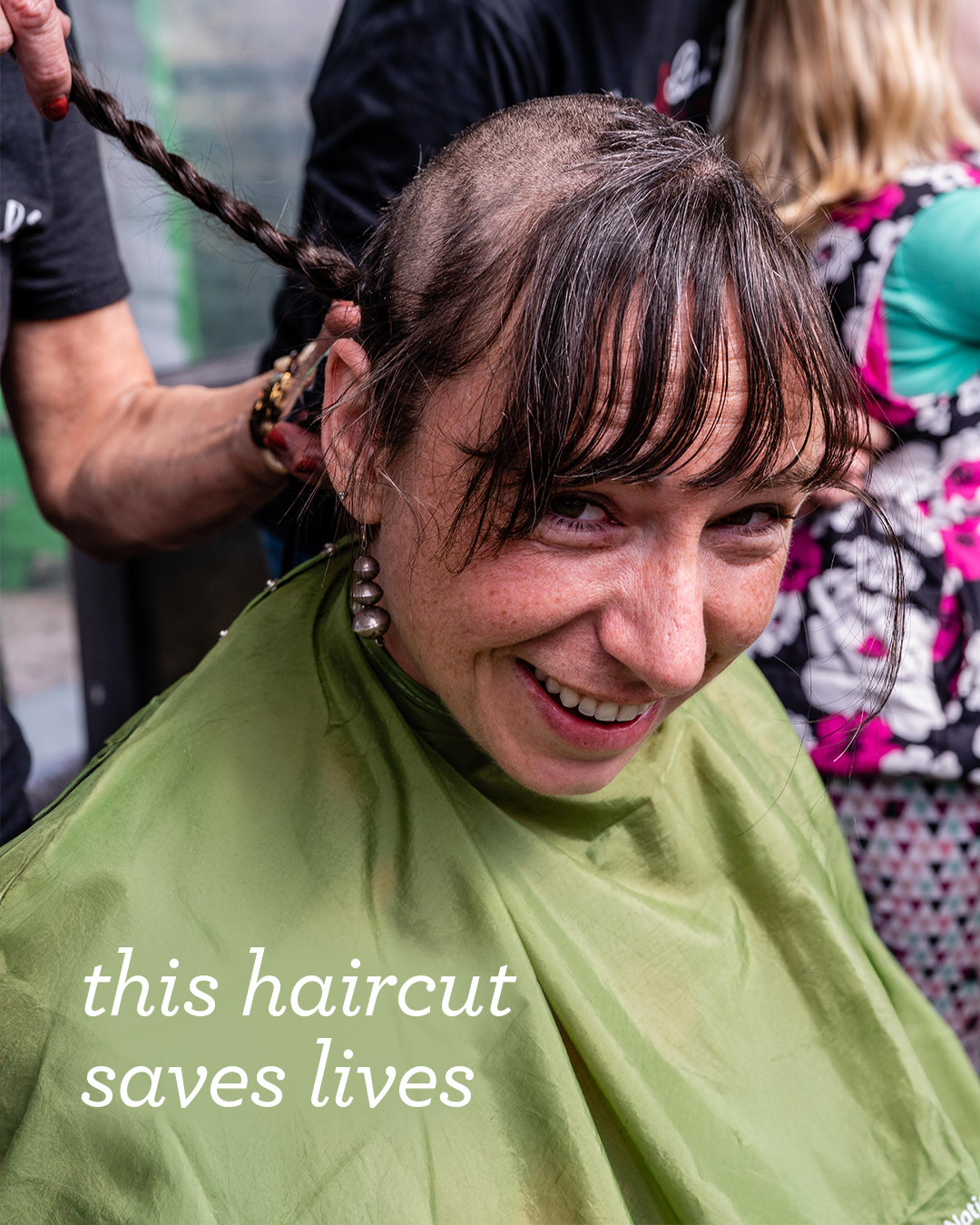
A close-up of a braid being cut off during a St. Baldrick's head-shave.
raleighstbaldricks The part everyone comes back for. #ConquerKidsCancer
SBraleighstbaldricks •••
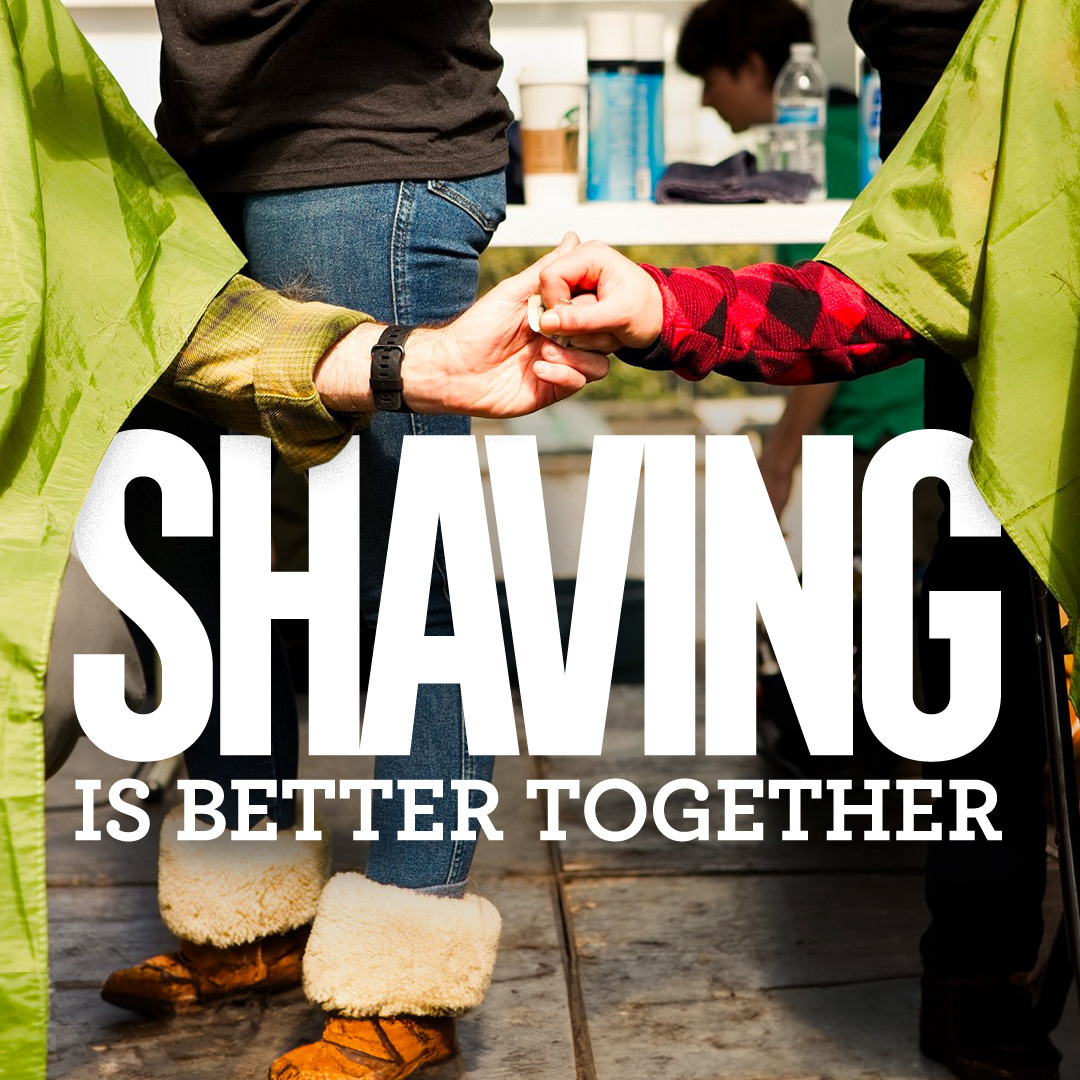
Event graphic with bold type over a handshake between two people at the event.
raleighstbaldricks Best day of the year, for the best reason. #ConquerKidsCancer
SBraleighstbaldricks •••
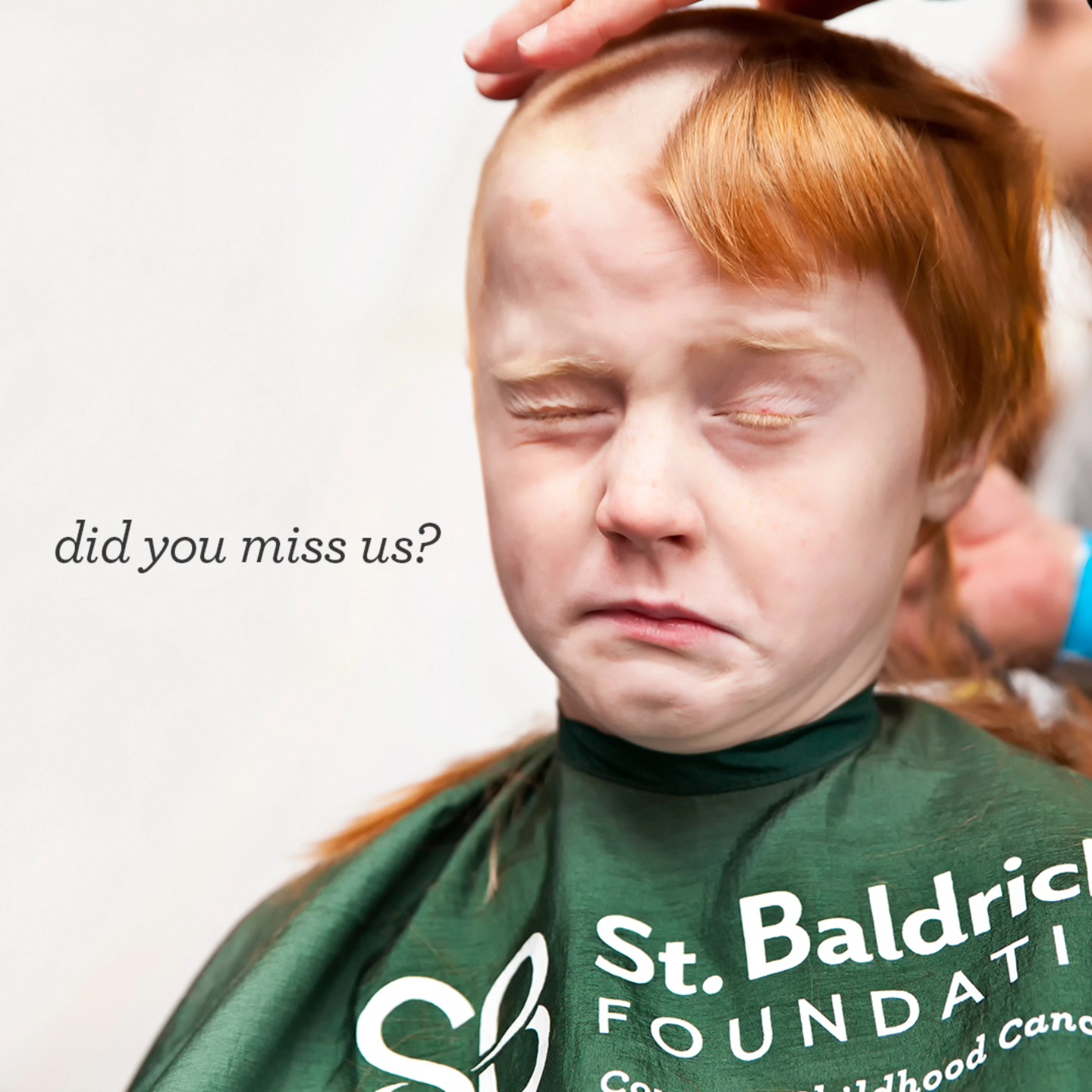
Event graphic asking miss us yet, over a young shavee mid head-shave.
raleighstbaldricks Miss us yet? #ConquerKidsCancer
SBraleighstbaldricks •••
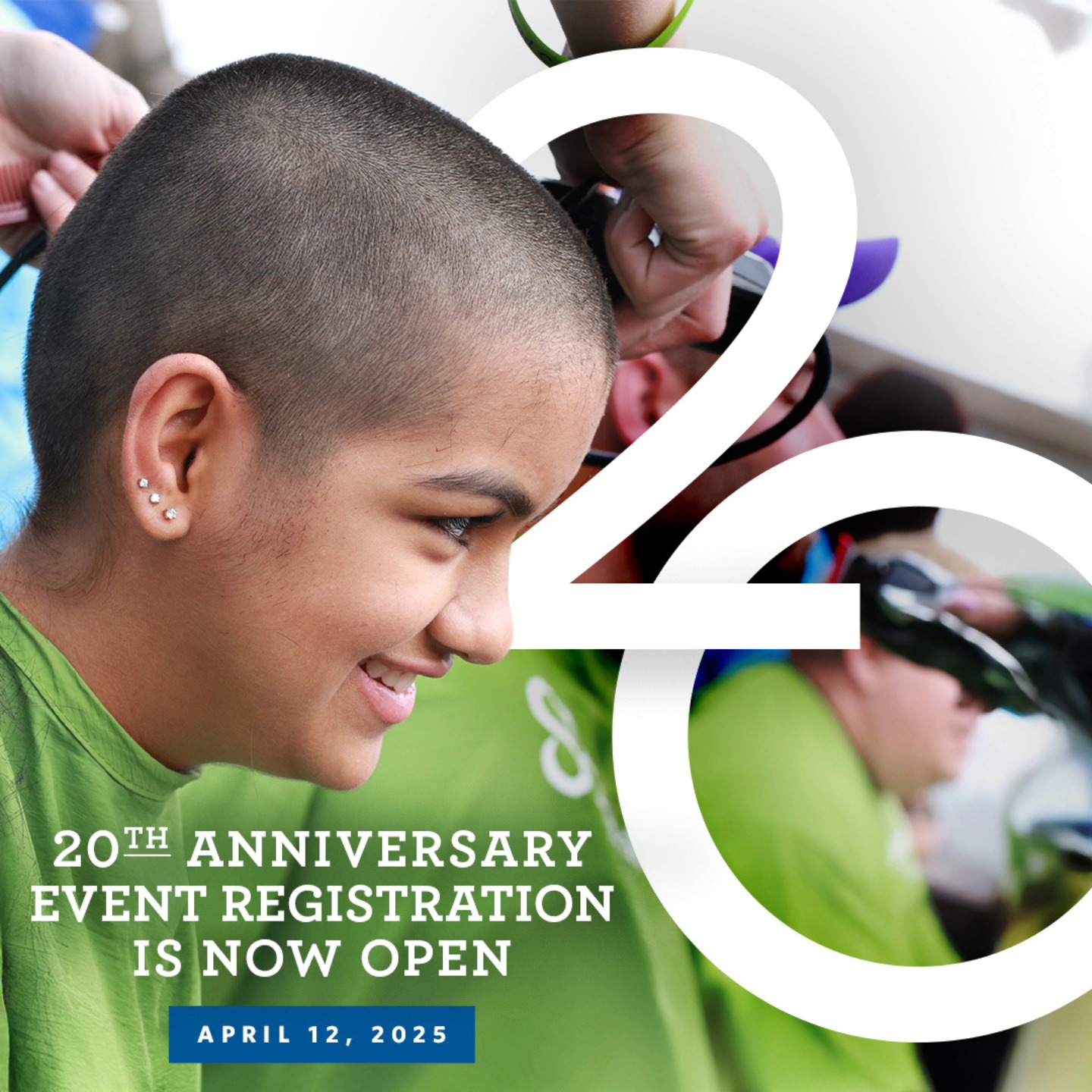
A young shavee getting their head shaved, with a large graphic numeral overlaid.
raleighstbaldricks Braver than the rest of us. #ConquerKidsCancer
Design was the other half
4

Social channels running at once, each with its own assets.

Local events owned their own outreach, so every channel needed art built for its audience without pulling away from the brand.

The St. Baldrick's heart mark in white on a green field.
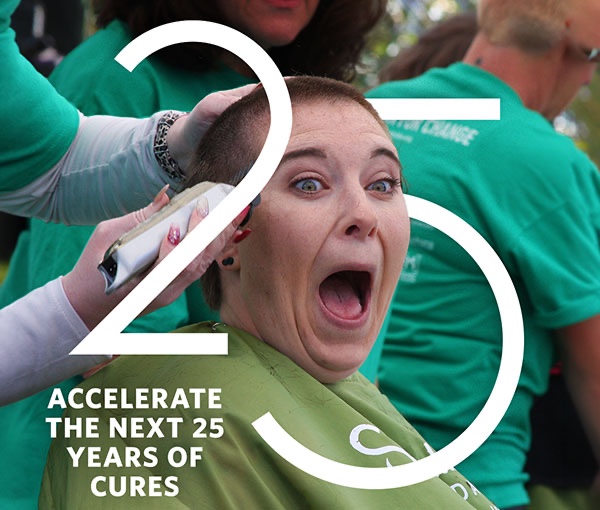
Campaign graphic reading Accelerate the next 25 years of cures, over a wide-eyed shavee mid head-shave.
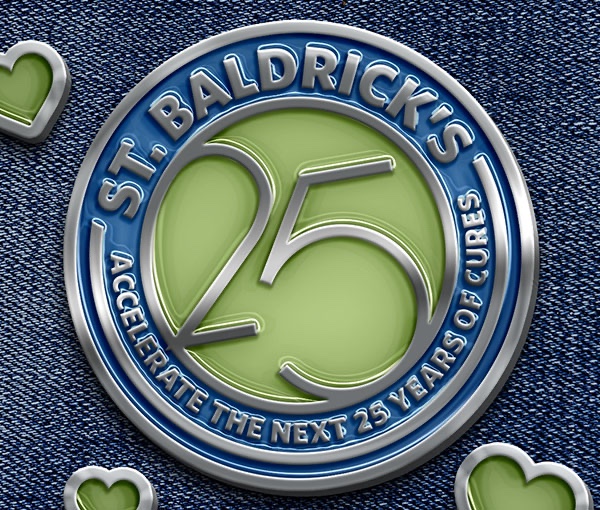
An embossed St. Baldrick's 25th anniversary badge rendered on denim.
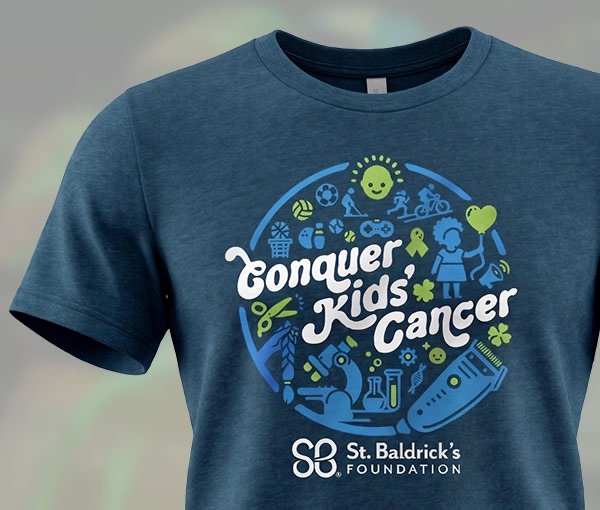
The Conquer Kids' Cancer design printed on a navy tee.

Scope of
Involvement

Brand and digital sat with one person, so the work ran from search strategy and analytics straight through to the campaign art and the shirts people wore to the event.

3Event tee designs
200+Social graphics
15Campaign launches
lightbulb Takeaways

What This Taught Me

The traffic number is the headline, but it's not the part I'd point to first. Organic growth compounds. It doesn't reset every campaign cycle the way paid acquisition does. For a nonprofit with a budget that has to stretch further than a consumer brand's, that distinction matters more than the percentage itself.

The part I'd actually point to is the shirts. For years the event tees had been a logo slapped on a blank, the kind of thing that gets worn once and then never again. I volunteered for the design work and led it for my whole time there. The one I'm proudest of pulled every part of the organization into a single mark: the head-shaving, the hair donation, the advocacy, the do-what-you-want fundraisers that could be a bake sale or a video game marathon, and the research underneath all of it. People complimented them, which was nice. Seeing one on a stranger in a grocery store eight months after their event was better. I can put a traffic number on a slide and defend it. I can't really measure that, but I know which one I'd rather have done.

Growth in that context wasn't a given. Their engine is an in-person event in March, and COVID took it out at the knees. The base didn't come back on its own, and every peer organization we compared notes with was candid about facing the same slide. We grew anyway, year over year, across the board. Some years only a little. But up, while the people around us were going the other way.

grid_view More Work
ADCOLOR

Five Years of Making One Brand Unmistakable

Nonprofit · Brand & Social

Lead digital designer since 2021. One voice carried from a social post to a projected animation on a venue wall.

Read the case study →
Uptern

Automating the Audit, Keeping the Judgment

Product · Self-Directed

Sixty percent of a site audit is mechanical. The other forty is why anyone hires me.

Read the case study →