Health Nonprofit
Health Nonprofit
The Opening
They had already bought everything. WordPress with a real forms setup, Google Analytics, a Google Ad Grant worth ten thousand dollars a month, HubSpot. On paper it was a marketing stack most nonprofits their size would envy.
None of it was connected. Each platform knew its own small piece of a supporter and nothing about the rest, so nobody could answer the only question leadership actually cared about: which of this is working?
The Challenge
The instinct in that situation is to buy something else. It's almost never the answer. The tools were fine. What was missing sat between them: no shared definition of a conversion, no naming convention that survived contact with a second campaign, no path from a first visit to a second gift, and no report anyone trusted enough to make a decision from.
They were also running three funnels at once without separating them anywhere: people who might give, people who might volunteer, and people who might sign up to hear more. Each wanted a different next step, and all three were being treated as one undifferentiated pool of traffic.
Every month the marketing director rebuilt an executive report by hand from three systems that disagreed with each other. The real problem was that nobody agreed on one version of the data.
My Role
Brought in through Bravely as the strategy and analytics consultant for six months, working across the marketing director, communications manager, development director, an external web developer, and executive leadership. Nobody in that group reported to me, which meant the job was as much alignment as implementation: getting five people with different definitions of success to agree on one, and then building the thing that measured it.
The Approach
Audit before proposing anything
A full pass over the website, the analytics, the ad account, and the CRM, plus interviews with everyone who touched marketing. The deliverable was a written assessment. Half of what leadership believed was broken was fine, and the parts nobody was worried about were the ones doing the damage.
Agree what counts before measuring it
A conversion hierarchy, written down and signed off: what a primary conversion is, what a secondary one is, and what is just engagement. Everything else depends on this document. Without it, five people report five different numbers and all of them are right.
Build the connective tissue
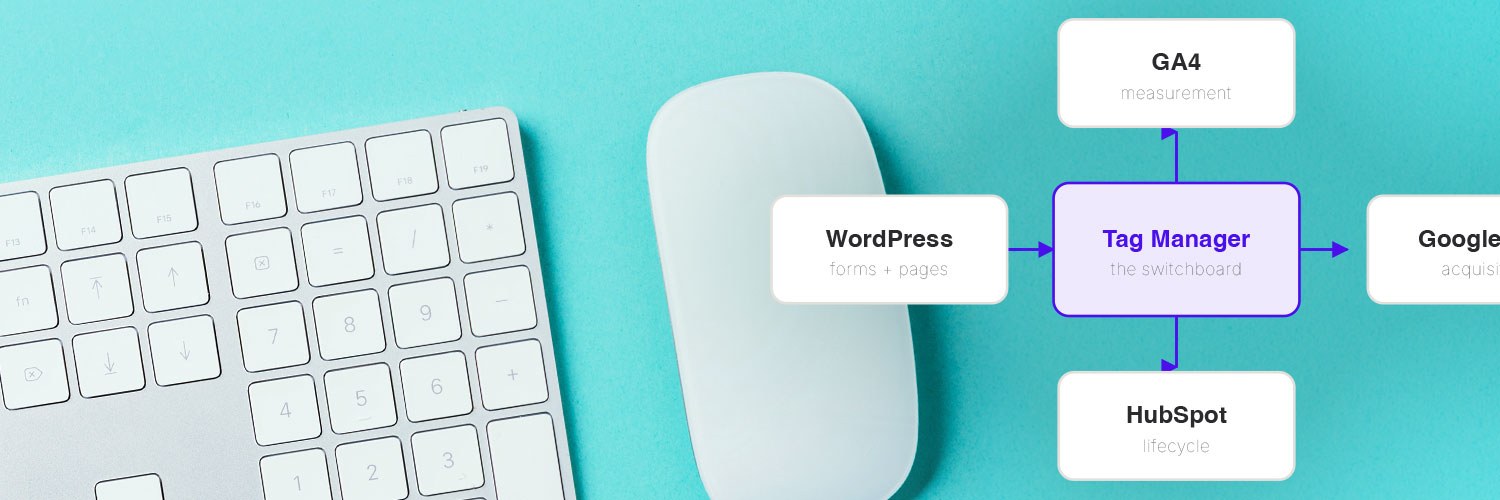
Tag Manager, an event architecture in GA4, HubSpot wired to the website rather than sitting beside it, and campaign attribution that survived the trip from an ad click to a donation. The platforms didn't change. What changed was that they started describing the same person the same way.
Hand it over
Dashboards that build themselves, naming standards written down, documentation, and training sessions with the people who would still be there after I left.
Anyone can buy the platform. The system is what makes owning it worth anything.
Most organizations this size aren't short of tools. They're short of the agreements that make tools add up: what counts as a conversion, what a campaign is called, who owns the number, and how anyone sees it without a spreadsheet. That layer is invisible when it works and expensive when it isn't.
First, the Foundations
Before any of the interesting work could happen, the basics had to exist. None of this was new work, but it had to exist first. It was planned for two months and took closer to three.
Four Tools, One System
The centerpiece of the engagement was the map between the platforms. Where a supporter enters, what each system is allowed to know about them, and which events pass across which boundary. Drawing that is the work. Once it exists, the implementation goes quickly.
Four platforms they already owned, drawn as one loop. Solid arrows are events moving forward, dashed are reporting reading back.
Naming Things So They Stay Named
Governance is a boring word for the thing that decides whether any of this survives your departure. We agreed a campaign taxonomy and a UTM standard, wrote them down, and built the reporting to assume them. Before, the same campaign appeared in reports under four spellings and got counted as four campaigns. After, a new campaign is nameable by anyone on staff in about a minute and lands in the right place automatically.
It's dull work, and the reporting doesn't hold up without it.
Reporting That Runs Without Me
Monthly executive reporting was a manual consolidation: export from analytics, export from HubSpot, export from the ad account, reconcile them in a spreadsheet, rebuild the slides. The better part of a workday, every month, done by the person whose job was supposed to be marketing.
That was replaced with a dashboard suite that reads from the source and refreshes itself: an executive view, a marketing performance view, a campaign view, an Ad Grants view, and a channel view. Same questions, answered continuously instead of retroactively. The monthly reporting exercise went from most of a day to under an hour, and the hours it freed went back into the work being reported on.
A Testing Habit
Around a dozen structured experiments ran over the engagement: donation page layout, landing page structure, calls to action, subject lines, form length, hero messaging. Roughly two thirds produced a measurable improvement and the rest came back neutral.
The neutral results mattered as much as the wins. An organization that has never tested treats a flat result as a failure and stops. The habit only sticks once a team has sat with a result that says this did not matter and understood that they now know something they didn't know before. Establishing that was more valuable than any single winning variant.
Handing Back the Keys
The last month was documentation, training, and a roadmap. Governance standards written for people who were not in the room when they were set. Sessions with the marketing and communications staff on running the dashboards, naming a campaign, and reading attribution without over-reading it. A prioritized list of what to do next, in the order I would have done it.
The engagement had a defined end date from the start, and everything about how it was built assumed that.
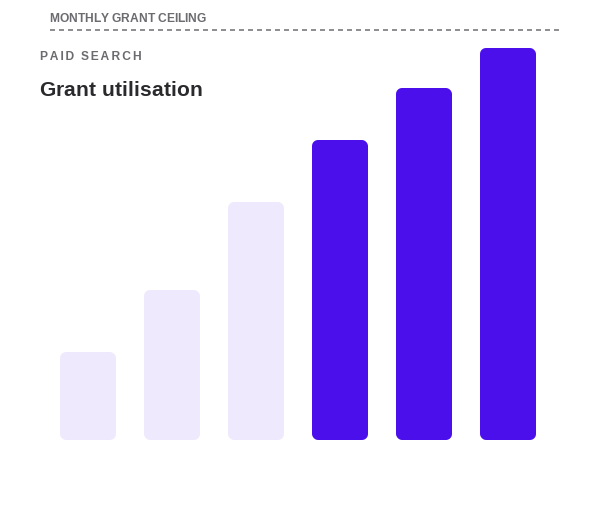
It held. Meaningful monthly conversions rose 82 percent across the six months, and when I checked back half a year later they were still climbing, on a stack nobody had added anything to. The Ad Grant had gone from around thirty percent used to almost the full ten thousand. The twelve-month number is the one I care about, because it shows the system kept working after I left.
Monthly executive reporting, down from the better part of a workday.
The report is now read from the source instead of assembled by hand.
What Was
Actually Built
A measurement framework, a lifecycle program, and the governance that lets both survive a staff change. Built to be operated by the people who stayed.
What This Taught Me
The hard part of marketing operations is getting people to agree.
I could have built the entire measurement layer in three weeks. It took closer to three months, and almost all of the difference was getting five people to accept one definition of a conversion. The development director counted a gift. The communications manager counted an engagement. Both were reasonable and neither could see the other's number. Until that was settled, every dashboard I could have built would have been a fifth opinion rather than a source of truth.
The other thing was the exit. This one was scoped to end, which forced better decisions the whole way through. Naming conventions someone else can follow. Dashboards that don't need me to refresh them. Documentation written for a stranger. It was still running at twelve months, and that is how I judge it.
St. Baldrick's
Turning Search Traffic Into Childhood Cancer Research Funding
The same problem at a named client: search, analytics and donor nurture pulled into one job rather than four.
Read the case study →
Google Ad Grants
Taking Underused Ad Grants to the Cap
The grant from this engagement taken to 94% of its cap, alongside a second rebuild and a commercial launch.
Read the case study →